5 Little-Known Factors That Could Affect Your Plastic Extrusions
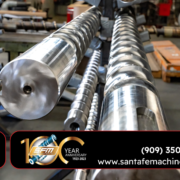
When troubleshooting performance issues in plastic extrusion, most engineers start by examining process parameters, polymer grades, or die design. However, several overlooked variables rooted in the screw and barrel – and their interaction with each other – can dramatically impact output quality, consistency, and line efficiency. As a manufacturer of custom screws and barrels for extrusion machinery, we often identify these hidden culprits during failure analysis and performance optimization projects.
1.) Screw Geometry vs. Polymer Behavior
Many processors rely on generic screws that may not be optimized for the specific rheological properties of the polymers being used. Subtle mismatches in screw geometry – such as flight depth, channel width, or compression ratio – can lead to shear overheating, poor melting homogeneity, or excessive residence time. Our engineering team regularly tailors screw profiles to the melt curve and viscosity index of each material to prevent degradation and ensure uniform melt quality across a broad range of polymers.
2.) Barrel Wear Profile and Energy Transfer
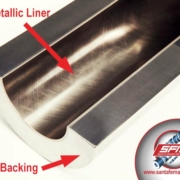
Wear in the feed and transition zones of the barrel is often underestimated. Even moderate barrel ID wear can disrupt energy transfer and feeding stability, particularly when processing high-friction resins or regrind. Over time, this wear increases torque loads, erratic pressure fluctuations, and surges. Our metallurgically enhanced barrel linings and hard-faced feed sections are designed to extend functional lifespan and maintain critical tolerances under high-load, high-abrasion conditions.
3.) Thermal Profiles and Barrel Zone Configurations
Many extrusion lines suffer from inconsistent melt temperature profiles due to poor thermal zoning or outdated control loops. We often see processors overcompensating with external heaters when the issue lies in poor screw-barrel heat exchange. Upgrading to zone-specific screw designs (e.g., barrier or mixing elements with high-conductivity alloys) and precision-machined barrels with tight thermal coupling can dramatically improve melt homogeneity and reduce energy consumption.
4.) Material Slippage and Improper Surface Finish
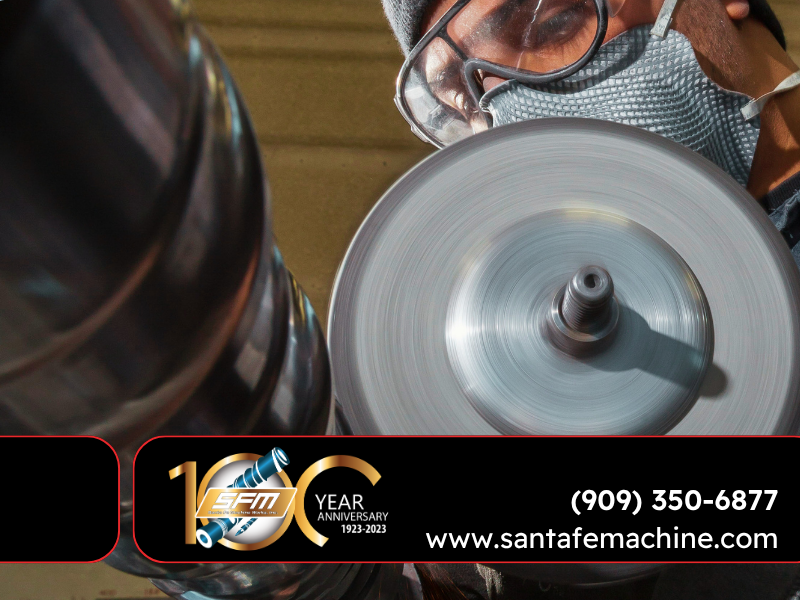
Surface finish inside the barrel and on the screw flights can have a significant impact on frictional drag and material conveyance – especially with slippery or low-bulk-density materials like LDPE or certain TPEs. We employ advanced honing techniques and wear-resistant coatings to achieve the ideal Ra finish for specific resin types, preventing slippage in the solids conveying zone and improving feeding efficiency.
5.) Incorrect Venting Design or Vacuum Integrity Loss
Multi-stage vented screws and barrels must be precisely designed to match the material’s devolatilization requirements. Improper vent port location or undersized vent channels can lead to incomplete moisture or gas removal, causing voids, bubbles, or dimensional instability in the final product. We support customers with CFD modeling and real-world testing to ensure that vented sections are correctly specified and that vacuum integrity is maintained throughout the run.
If your extrusion process is underperforming despite dialed-in conditions, these lesser-known mechanical and metallurgical factors may be to blame. Our engineering team works closely with OEMs and engineers to design, manufacture, and retrofit screws and barrels that eliminate hidden inefficiencies and restore process control. Let us help you avoid the problem – before scrap rates climb and machine wear becomes irreversible.
How can we help you?
The doors have been open at Santa Fe Machine Works, Inc. since 1923. For the past 45 years, we have been dedicated solely to manufacturing and supplying new and rebuilt Posi-Melt injection screws, injection screws and barrels, extrusion screws and barrels, and valves and end caps to the plastics industry. We also offer custom-tailored screw, barrel, and valve combinations, allowing our customer’s production goals to be met in the best, fastest, and most cost-effective ways possible. Our employees have over 200 years of combined experience in the plastics industry and are eager to support your specific extrusion or injection needs. Have a question, need assistance, or looking for a quote? Contact us today!